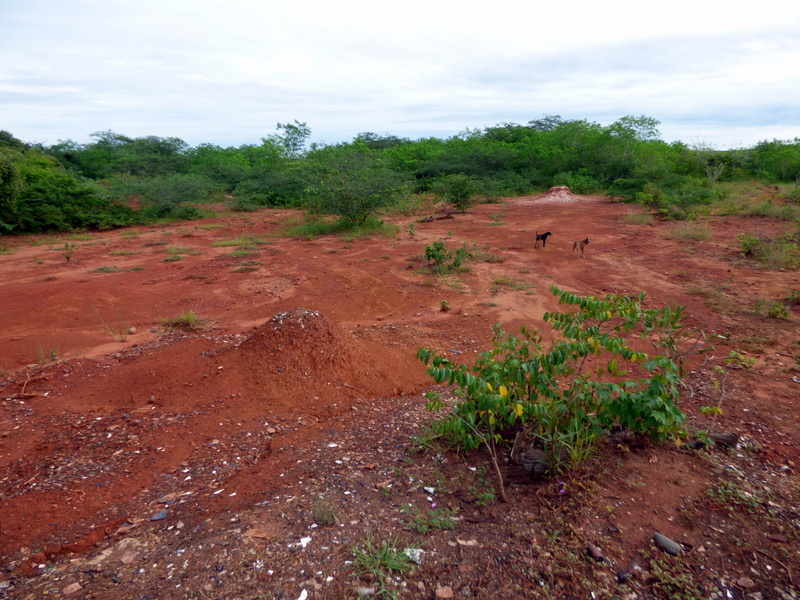
We got an early start to visit Sarigua National Park, which
is in the process of regeneration after being clear-cut for cattle farming in
the past. As it was being transformed,
the government sold some shrimp farming concessions in a coastal part of the
park, which was not well-received by the environmentalists. However, it has had
the positive impact of eliminating the sandstorms that plagued the area after deforestation. Large swaths of the park
are almost barren reddish dirt, heavily eroded as a result of
deforestation. Non-native plants were
brought in and started doing better after the shrimp farms started, creating
more sheltered areas where native vegetation is finding a foothold. This is a
hot, dry part of the country, and even though we had to leave the hotel at
7:30am, in the end we were glad because it was quite hot by the time we left two hours later.
Our next stop was to visit a drum maker and potter, both of
whom do their work totally by hand. Randolph also plays and
teaches. He makes a couple types of drums in various sizes and showed us the
painstaking process before playing for us. I apologize for the sideways video! I need to learn to hold the camera properly!
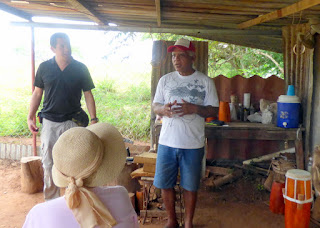 |
Randolph with some of his drums on the right. He trained as an
architect, but developed vision problems and now makes drums
of various sizes. We brought home a small one - a bit smaller
than the one on the bench by his elbow. |
 |
Chisels of various types and lengths are used to
chop out the center. He uses a machete to shape
the outside. The stain on the drum is plant-based
and is his signature color. |
 |
Randolph plays his personal drum. It is darker
because a friend said he was going to decorate
it for him and brought it back with this darker stain. |
The potter specializes in
large pieces and forms everything by hand without a wheel. He learned from his
grandmother and his son is continuing the business, but not the same original
process. He showed us how to start a pot and then add to it section by section,
creating a smooth piece. He decorates pieces and his wife paints them.
 |
| He was carving a design on a large pot as we arrived. |
 |
He doesn't use a wheel, but builds from the ground up starting
with a big wheel of clay that he punches down to create the
beginning bowl shape. |
 |
When the pot needs to be taller, he adds a thick 'rope'
of clay to the top edge and blends it in. |
Then it was time for lunch, which we used to catch up on the pc and phone because the wi-fi
connection in our room is very iffy, but fine in the lobby.
After lunch, we got
back on the bus for a trip to Guarere and a renown pollera maker. These are
elaborate embroidered dresses that are entirely handmade. The company completes
five of them each year and employs 25-30 artisans to complete different
sections and types of hand work. A dress can cost nearly $10,000, but can be
used for many occasions and is frequently passed down to future generations.
The other parts of the costume include beaded hair ornaments (6 combine to make
a sort of hat), fancy shoes, and large, truly over the top jewelry.
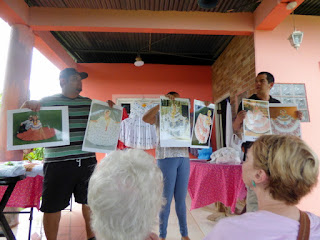 |
Photos of various dresses they have made. They do several types
of decorations: crewel, embroidery, cross stitch, and applique. Each
dress has several tiers, which are made in smaller sections and
stitched together. The blouse is similarly tiered, very cape-like. |
|
 |
| This is a bottom tier of several pieces stitched together. |
 |
The husband used to be a truck driver, but started
helping in the pollera business when that became
unprofitable. He now makes the decorative tatting
that joins the tiers together. You can see plain and
embroidered skirts on the wall behind him. |
 |
He showed us how to make this pattern -- It must have
taken some practice to get as fast as he is. |
Then we stopped at a nearby school where a group of eight
youngsters, ages 5 to 10, demonstrated traditional dances.
 |
Some of us were invited to dance and Jim
decided to be shorter for his new partner. |
 |
The girls are wearing the simple unembroidered version of a
pollera skirt. |
From there, we drove
to Las Tablas, famous for its 6-day Carneval before Lent. The town normally has
6,000-7,000 residents, but swells to 300,000 for Carneval. People empty out
their houses and rent them to visitors, who mainly come on public transportation
because parking would be horrendous. The highlight is a series of parades of
'queens', in elaborate floats, wearing the polleras. There is no identified
winner, and it can cost a family up to $700,000 to compete.
We visited a fire station (one our fellow travelers is/was a
retired volunteer fireman, interested in learning more about the situation
here. The bomberas (local word for firefighters) were very welcoming and showed
us some of their equipment as well as talking about their jobs. The timing of
the fire station stop was excellent, because we got the first actual shower
during our time here while we were in the shelter of the station. The rest of
town itself was pretty unimpressive.
Octavio showed us the plaza that was the center of Carneval
festivities, and we walked around a bit hoping to stumble on something
worthwhile before drifting to our dinner restaurant early. As we were getting
started on dinner, loud music blared in the street and we were treated to some
sort of a parade, primarily of (apparently) high schools girls in red riding on
top of SUVs decorated with pink balloons, waving as they went. They were
followed by a couple vehicles of a brass band, and then more students dressed
in gray. Nobody seemed to have a clue what it was about, but it was an
interesting spectacle to end our day. We tried taking photos from the inside, but the windows had decorative grating and the photos are useless, so we only got a couple shots of the festivities once we realized we (read: Jim) needed to go outside.