Wednesday, May 21, 2014

May 21 - Travel to Sydney, Start Exploring


This was a pretty quiet day – left for the airport at 10, flew to Sydney, checked into our hotel, then (this is the exciting part) walked to the subway station, took the train 2 stops to Sydney Harbor and walked around while Vic told us a bit about Sydney history.

Sydney is preparing for VividSydney, starting Friday, when many buildings will have light shows on them, including the Sydney Bridge and the Sydney Opera House. I had seen videos of this somewhere and am very happy that we will get to see the opening night. Tonight as we walked around, several displays were being tried out and were fascinating to watch.

We had dinner at an Irish Pub, dessert at a Copenhagen ice cream place, and came back to the hotel to prepare for Thursday, our big official tour around the city.

Tuesday, May 20, 2014

May 20 -- Snorkeling at the Great Barrier Reef

Today was to be a big part of the reason we came to Australia -- to snorkel on the Great Barrier Reef. Although we met that goal, I have to say it was a challenging and somewhat disappointing day. 

The good news was the bus didn't leave til after 9 so we got to sleep in vs. getting on a bus at 7 or earlier like the last few days. AND we learned that the hotel will make omelets to order, so I even got eggs I enjoyed vs. a choice between mass-produced scrambled eggs (Yuck!) and hard-boiled eggs (Dull). However, it was pouring down rain as we left for the boat and it was pretty windy. The weather forecast said rain all day and winds dying down. Apparently it DID rain all morning in Port Douglas, but sometime on the way out to the reef, the sun came out. 

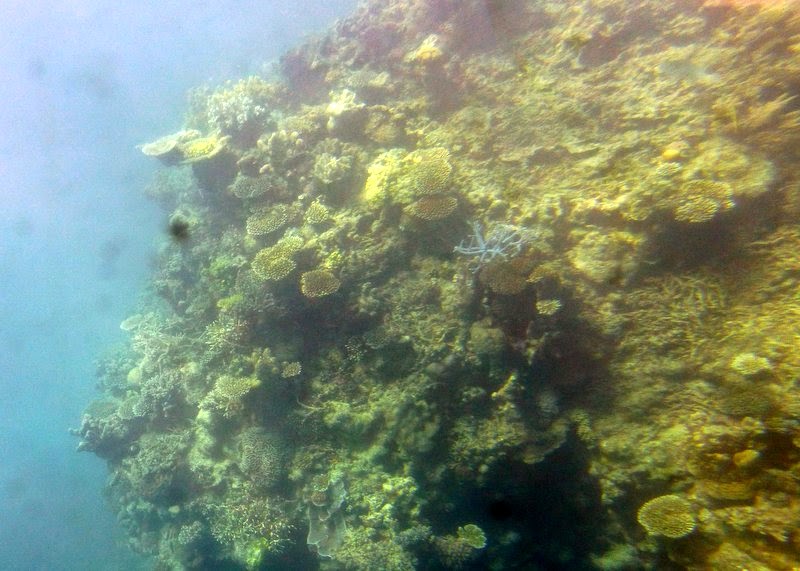
Even though the seas were pretty heavy, my dose of ginger and arm bands did a pretty good job of keeping me ok. The cabin crew, however, was kept pretty busy by other people who had issues. The boat took us out near the eastern edge of the reef, not that far from the end of the continental shelf to an area called Agincourt Reef. The Great Barrier Reef is actually a huge collection of nearly 3,000 smaller reefs. The company we toured with, Quicksilver, with says that the outer reefs have better visibility because they are constantly being replenished with ocean water and no runoff. They have a 300 passenger catamaran ('that slices thru the waves' -- not!) that ties up to a 2 level platform with tables on both levels and a canvas-type roof on top. In addition to a snorkeling and a diving area, they also have an underwater viewing area so you can stay dry and get a peek at things, plus a couple boats they call 'semi-submersibles' -- they float on top, but they have a narrow below-water-level seating area and take a spin around the reef with a guide to give you a clue what you are looking at. You can find them on the net to get a better idea of what it was like: http://www.quicksilver-cruises.com/
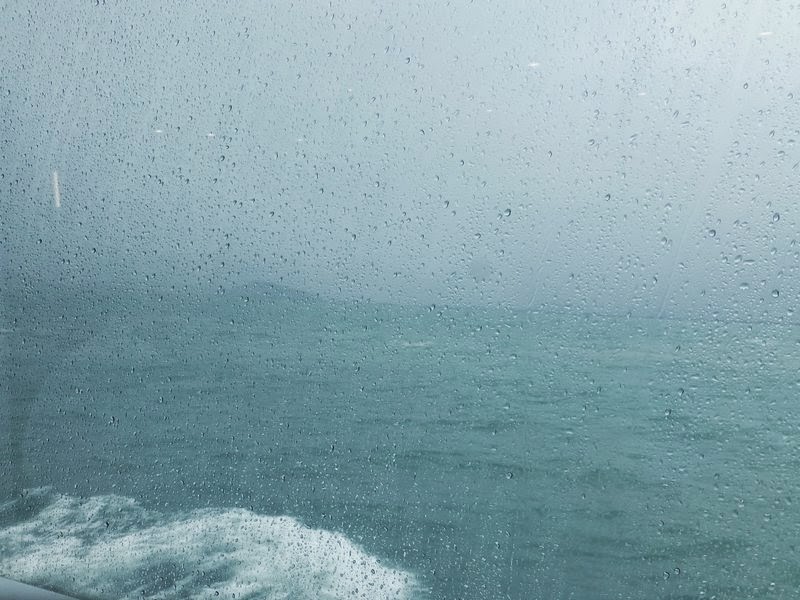
View from inside the cabin on the way out

After we got to the sunshine

The activity platform, our home for 3+ hours
Once we got there, we collected our gear, changed to suits, and some of us rented lycra body suits -- they are protection from jelly fish stingers but also add a layer of warmth, though not as much as a wet suit. The water was rougher than I have snorkeled in before, but I was set to give it a chance. Interestingly, they had a half submerged platform to start with – this was where we sat on benches to put on fins and the crew checked our goggles and snorkel before we sat on the edge and just sort of floated off instead of having to deal with jumping in. It was also too deep to stand up in the water.

The mad dash for equipment

Vic, our guide in Australia, showing how great the lycra suits can look.
Right away, I knew this was different than my previous experiences, and not in a good way. Little bits of salt water kept getting in the snorkel because of the waves, and when I kicked to move around, I didn’t go much of anywhere. I float easily and normally can snorkel until I get chilly, but trying to move around, it felt like I was in a head wind and I tired quickly. The coral was disappointing and there weren’t that many fish either. Plus we quickly got away from the areas where the coral was near the surface and the bottom was 20 feet below and just sand. I much prefer the bottom to be closer to 10 feet away. All this was so stressful and tiring to me, that I totally wilted and gave up after only 15-20 minutes. I thought I might try again later, but the wind came up and I conceded that I was not up to it. Jim stayed out for another 20 minutes or so until he felt like he had seen what was there.


Back on board, we walked down into the platform viewing area and saw a few fish, then after lunch we took the semi-submersible ride. This seemed like a fine idea, but I had not allowed for the waves on the top which made the lower viewing area swing around a lot. With no watch on, I had no sense of the time, the area was crowded and claustrophobic, and a spoiled 3 year old screamed most of the time because she really wanted to be anywhere else but on the boat. We did see a lot more coral, but a lot of it looked dead, and again there were few fish.


The semi-submersible we rode on pulling into the platform

Top level of the platform
   
The ocean beyond the edge of the reef and continental shelf
Back to the platform finally, we changed back to real clothes and went aboard the boat for the sail back. I was feeling kind of peaked after the submersible ride and was ready to be gone. Once we got underway, the ride was sort of like being in a washing machine – a lot of side-to-side and up-and-down action, so I slipped into my sort of a snooze mode to endure it. The spoiled 3 year old carried on for over an hour a few seats ahead of us til she finally conked out. Meanwhile, Jim was talking to one of the marine biologists on board who said that a lot of the coral was damaged by the cyclone they had about two months ago, and that starfish are exploding in population due to the warming ocean and they are devastating the coral too.


It felt really good to get back to the hotel and shower off all the salt and get ready for dinner.

Monday, May 19, 2014

May 19 - Daintree Rainforest and Crocodile Cruise

Fan palms in the forest
We were up bright and early for our drive up to Daintree Rainforest National Park. We had to cross a river on a barge -- Vic told us the state doesn't build a bridge there because the barge is a good way to limit traffic into a sensitive ecological area. This is actually the very first rainforest in the whole world, and has existed for an estimated 175 MILLION years. It is a World Heritage site and was saved from logging for its cabinet-worthy woods as the result of a national election promise in the 1980s that was actually carried out. The state it's in, Queensland, was not amused or happy because they got lots of revenue from the logging which had to stop immediately. They sued, but the Australian Supreme Court ruled that the needs of the country as a whole to preserve this unique area overrode state concerns about revenue. An interesting point is that the tourism income has now exceeded the logging income.

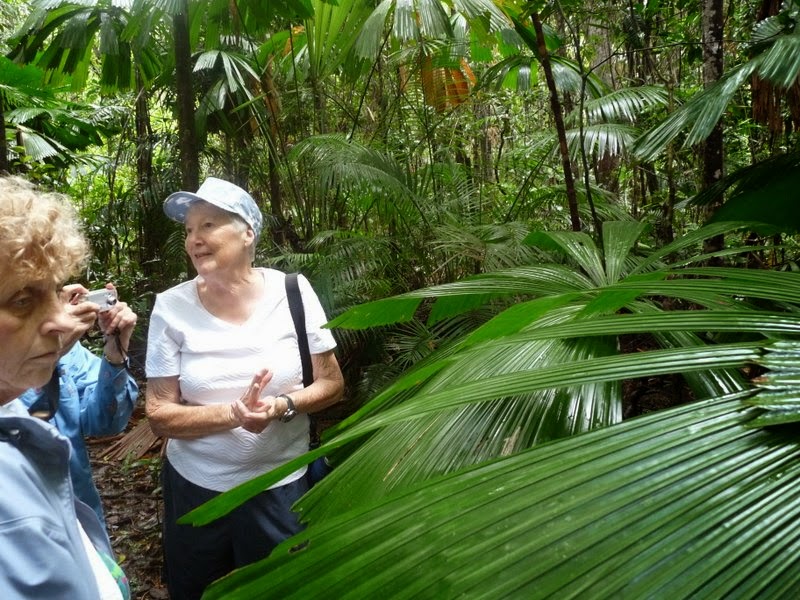
Our guide, Pru, had bought a huge swath here 21 years ago and now protects the land and leads tours. We saw very little wildlife, but there was a profusion of vegetation, many of the trees being over 1,500 years old. We saw a glimpse of a lovely rainbow-backed bird and a huge blue butterfly, but neither stuck around long enough to be photographed.


Pru shows us features of some young fan palms

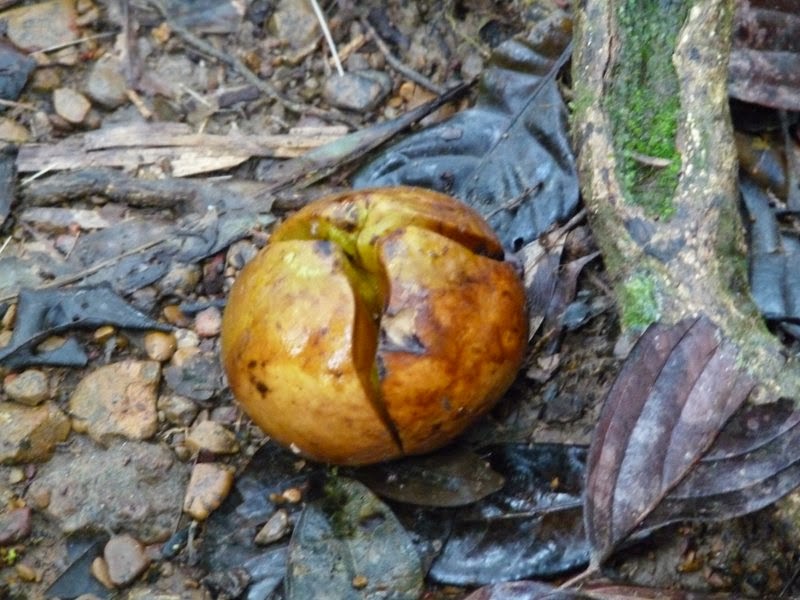
Idiot fruit - poisonous. Cattlemen thought someone was
poisoning their herds when they died after eating this.

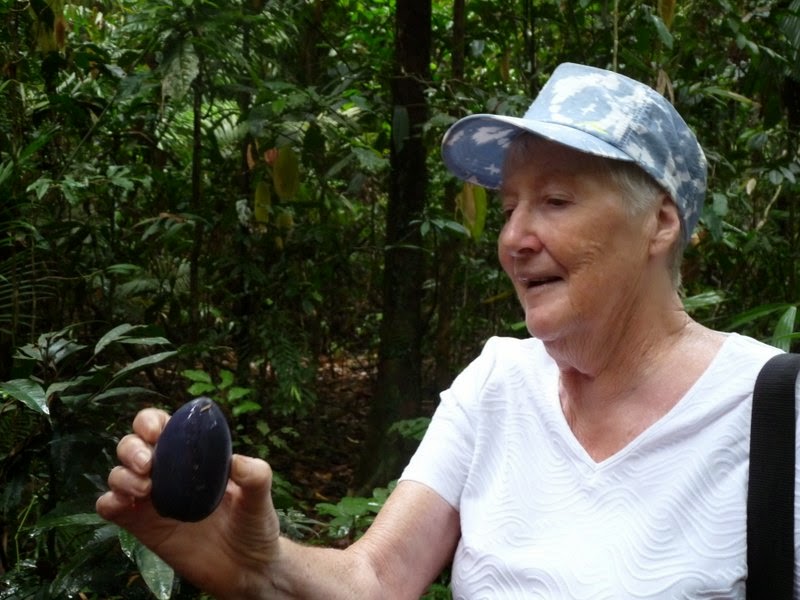
A kind of plum that only cassowaries can eat without dying
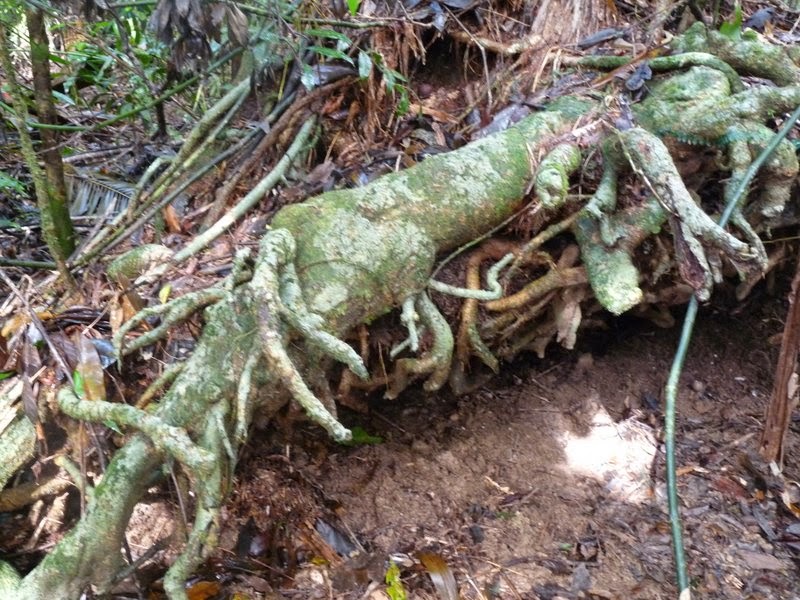
Rainforest trees have shallow root systems. The amount of rain
washes away ground nutrients, so there is no point in deep roots.
Our group in the rainforest
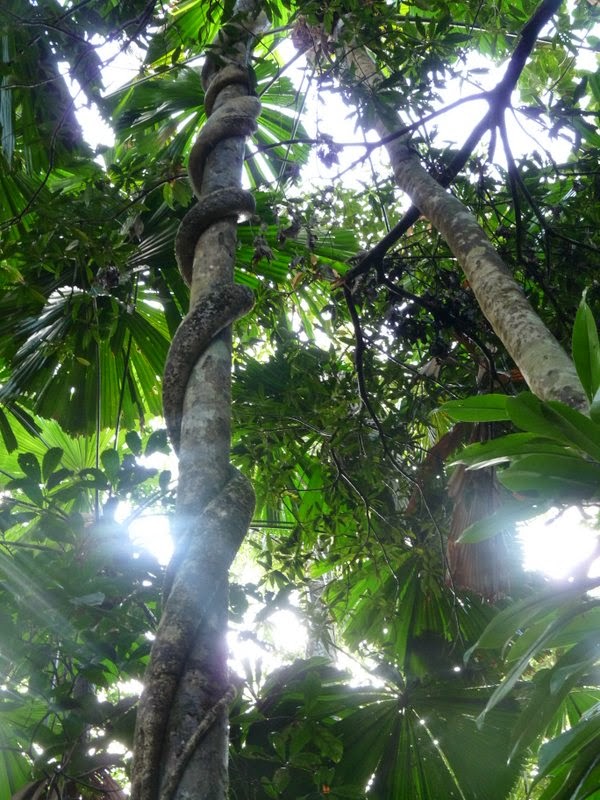
The twisty thing is probably a strangler fig
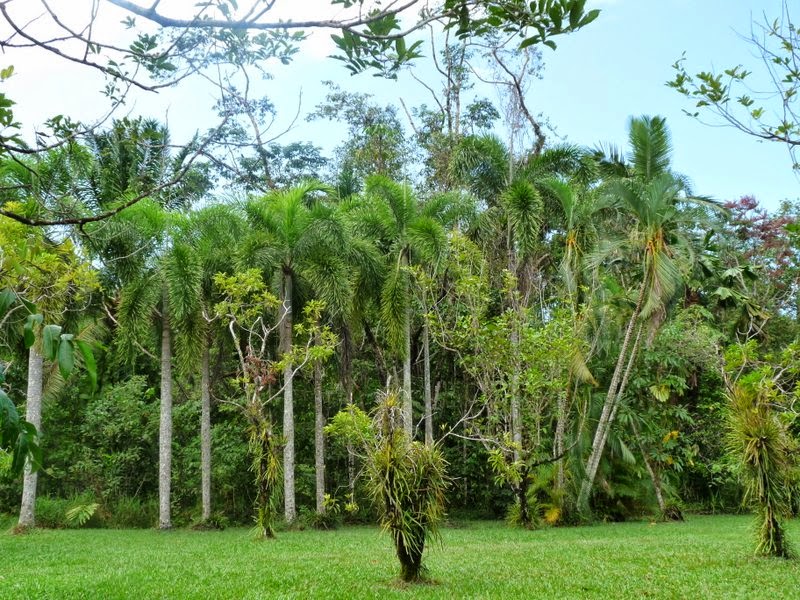
The edge of the forest where an orchard was planted long ago.
The rainforest is encroaching naturally and taking it back.

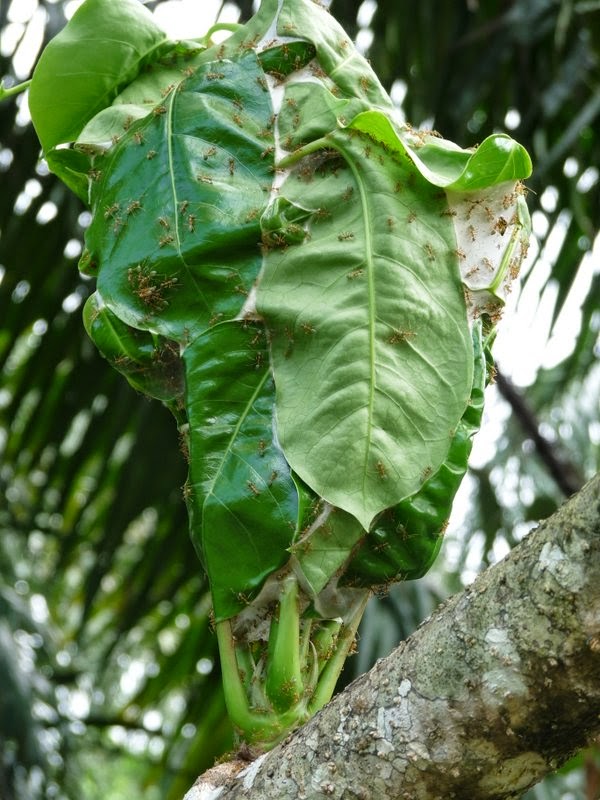
An ant's nest in a tree built using the tree's leaves.

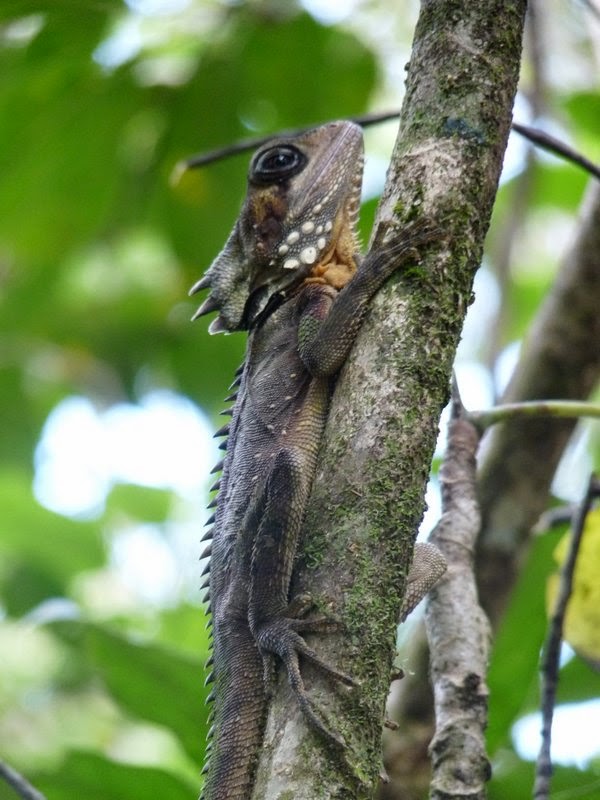
Dragon lizard in a tree
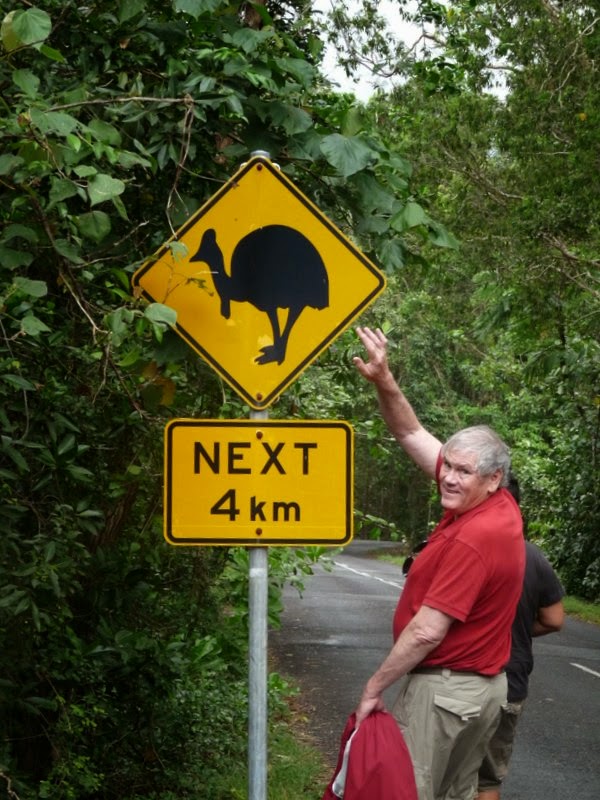
Cassowaries are major players in the life cycle of many of the plants, but none were around today to be admired. Their population is reducing and this could have major impacts for the forest. Vic showed us a very funny road sign that had been modified -- lots of road signs show pictures of various animals, like kangaroos, and the cassowaries have one too. There is also a road sign advertising speed bumps that is a flat thick line with a rounded lump on top. Some clever person added feet to one end of the flat line and a bird head to the other, wrote 'BEFORE' on the cassowary sign and 'AFTER' on the modified speed bump sign. When a recent cyclone took the signs out, the local government PAID to have the customizing re-done.
This is the 'BEFORE' sign.
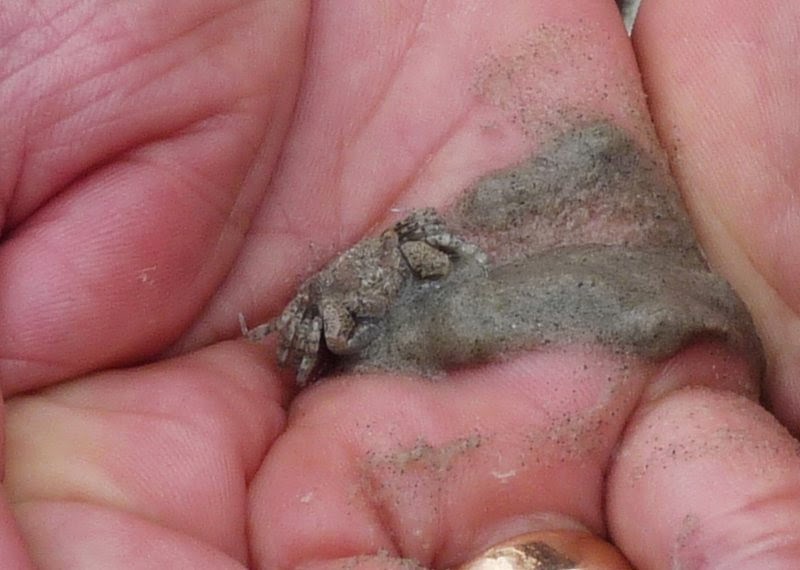
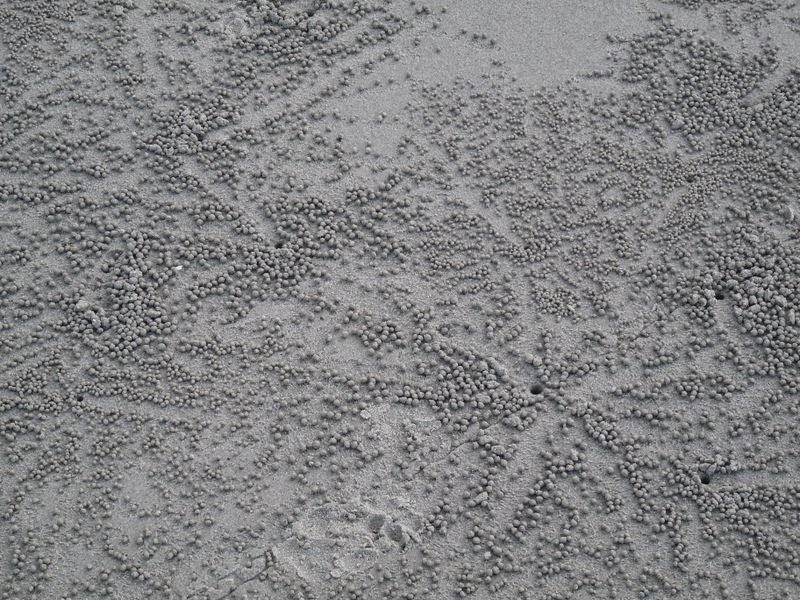
After an hour and a half walking thru rainforest, we stopped for tea and a muffin and Vic showed us an odd thing at the beach -- the sand was all rolled up in little balls and near the water's edge, dozens of tiny crabs were scurrying away.  They are soldier crabs that dig holes to survive under the sand, and the sand they burrow out forms the little balls. Sometimes, they create patterns of the balls, which we saw later in the day when we went to the beach at our hotel.
This is the dinky little crab....

that creates this interesting pattern of sand balls on the beach.
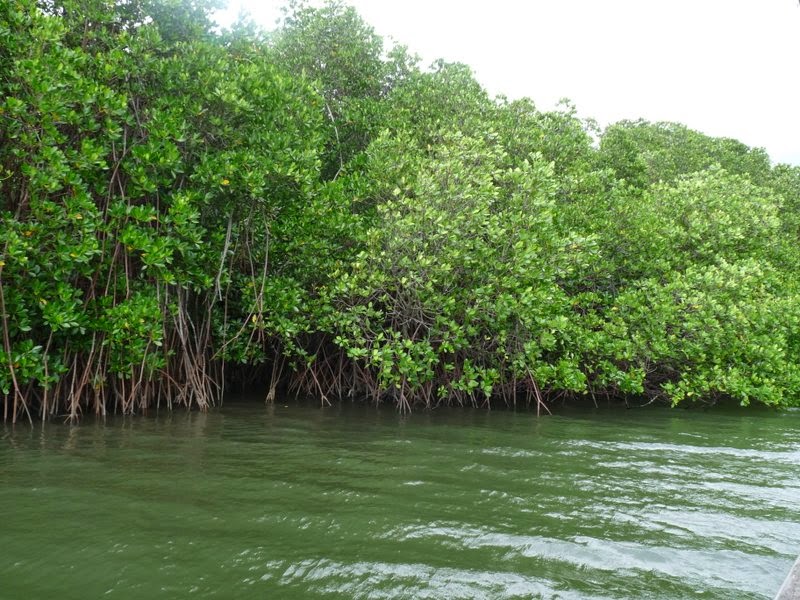
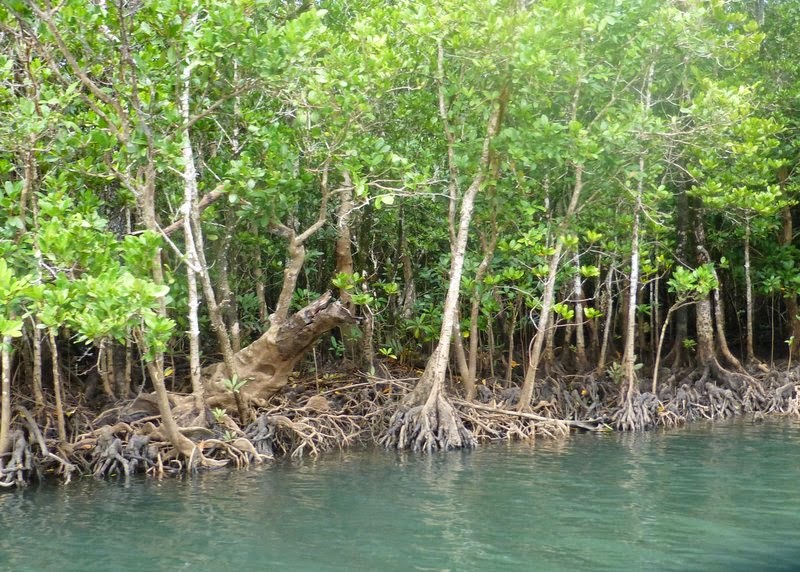
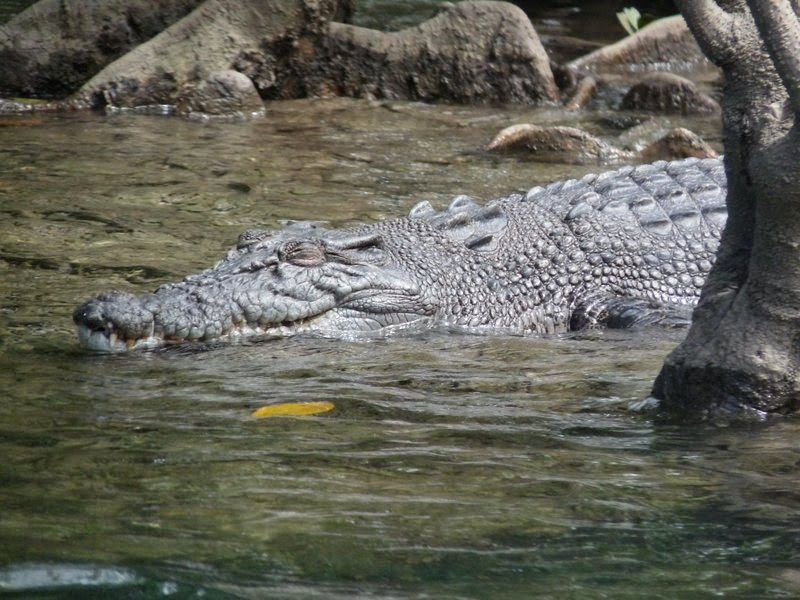
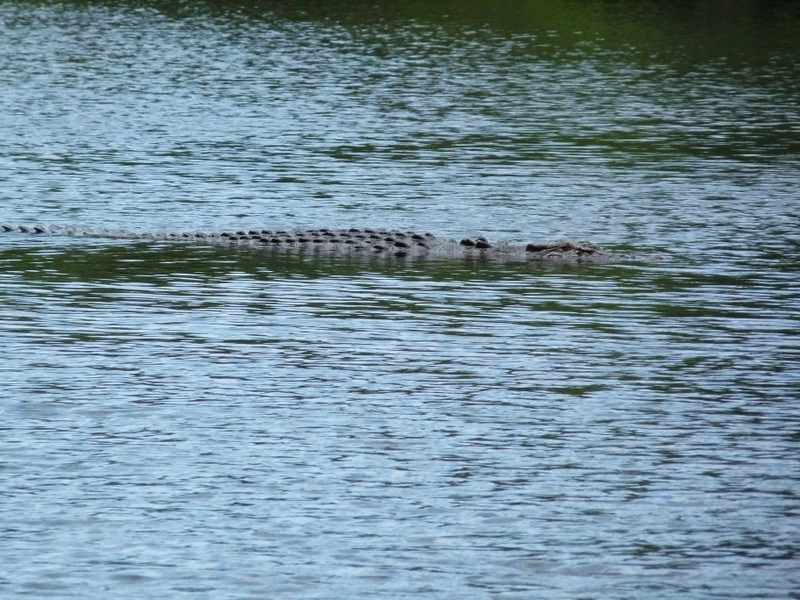
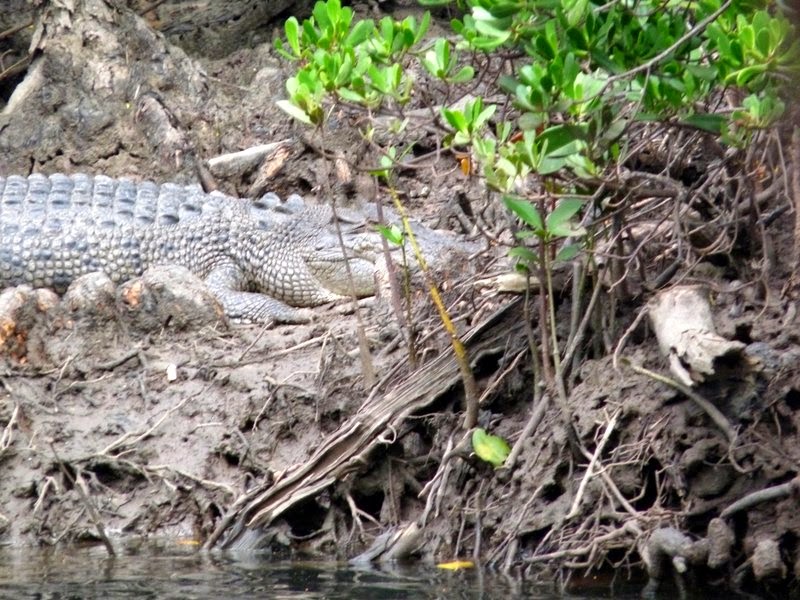
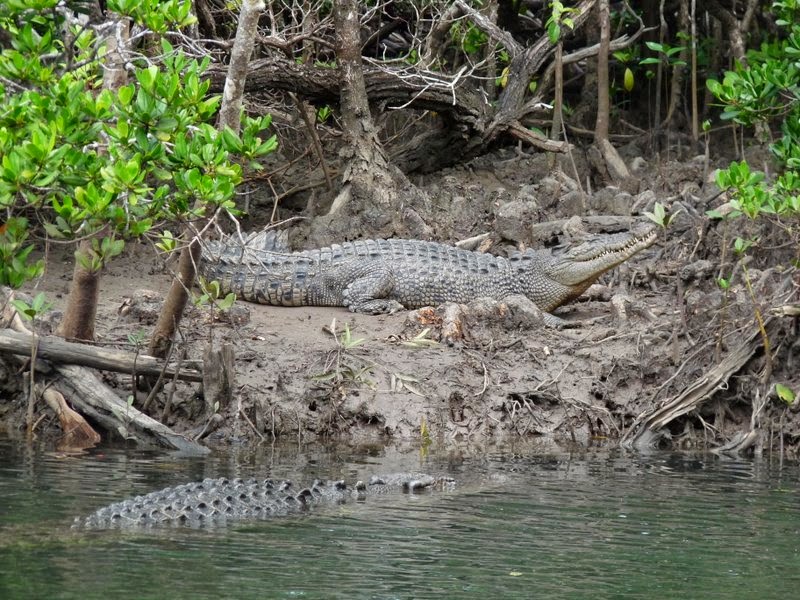
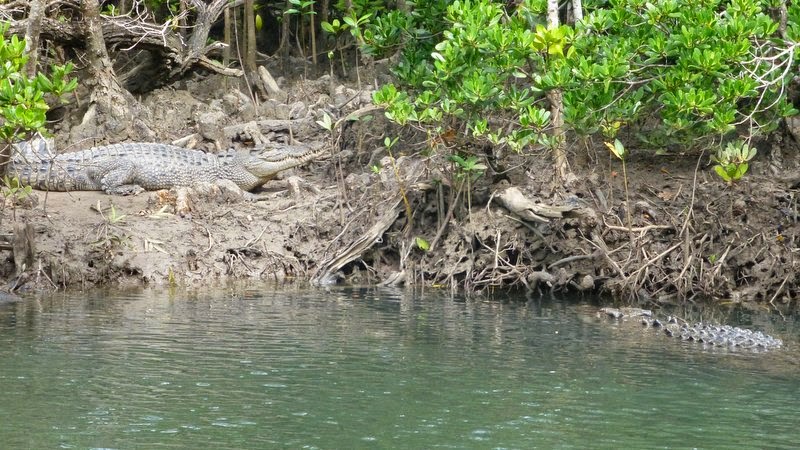
Next, we drove to the nearby Copper Creek area for a cruise through a river mangrove area, and spotted three crocodiles in the process.There are several kinds of mangroves, some better suited to the saltier water closer to the sea, some better inland. Female crocodiles stake out about 1 km of territory along the river bank and defend it, so we had good potential to see one. We struck it rich -- we saw a female in the water at a shallow spot in a bend in the river, and we were all thrilled. Then, just about the time we were going to turn around and go back, it looked like a log was crosswise to the flow of the river -- turned out it was a male croc (out of season) apparently checking out his chances because there was a female sunning herself on the bank. We watched as he slowly swam nearer -- she lifted her head, apparently to indicate that she was aware of him but otherwise totally ignored him. He swam right up to the bank, a bit past, and then came back before finally submerging and quietly slinking away. Really magical!

Red Mangroves -- better in saltier water
The other kind, that prefers fresher water


Older, taller trees have longer roots


The pointy things are 'snorkle roots'.

The first croc we spied

First croc, close up
Boy croc, apparently on the make


Girl on the bank he is interested in

He comes closer, she lifts her head.

Closer still

Rejected, he comes back to see if he can change her mind, then gives up.

After lunch at a lovely rainforest restaurant,we went for an ice cream -- 4 flavors: blackberry, passionfruit, wattle berry (sort of coffee/chocolate), and jackfruit (sweet but dull). There were more blue butterflies here and Jim actually managed to get a photo!


Finally, we went back to our hotel for a walk on the beach and dinner.

May 18 -- Uluru Sunrise, Kata Tjuta, On to Port Douglas

We were up early today to see the sunrise on Uluru (pronounced OOH-loo-roo), which I had expected to be pretty grand, based on how the sunset was. We were on the bus by 6:15 for the half hour trip to the viewing area. I'm just glad we were here in the fall with later sunrises! We got coffee and a snack when we arrived, then headed to the platform to watch. The actual sunrise (behind us) was quite nice, but the sun on the mountain was pretty tame. I forgot to mention yesterday that Uluru is a lot like an iceberg -- most of it is hidden. It goes up about 1100 feet, but there is another 1.5 miles underground.

Sunrise on Uluru

Kata Tjuta at sunrise
From the viewing platform, we also had a nice view of Kata Tjuta (pronounced KAH-tah YOU-tah), which is about 30 miles away from Uluru. This is also called the Olgas, was formed around the same time from very different rocks and has eroded into 36 separate but grouped domes. We went back to the hotel for breakfast and to check out, then headed over to Kata Tjuta for a walk into the Walpa Gorge and a billabong (watering hole). The flies here have been horrendous and we are very glad we heeded the warning to bring head nets that fit over your hat or just over your head and keep the flies off your face. Thankfully, the flies don't bite. The scenery here was quite different even though these mountains look pretty much the same from a distance. This one is much more rugged and rocky, where Uluru looks like sandstone.
Partial view of Kata Tjuta closer
Entrance to Walpa Gorge


Jim as we near the gorge


Rick at the billabong
Lynn with requisite head net to protect from flies
much appreciated!

Looking back out at the outback

Kata Tjuta from another view

After lunch, we flew to Port Douglas, a small town about an hour out of Cairns, which will be our  starting point for exploring the Great Barrier Reef and Daintree Rainforest. It is the nicest of the hotels so far and quite a pleasant contrast to the more basic places we experienced in Central Australia, though everywhere has been fine. It is hard to believe that we have less than a week to go on our three week adventure! It would be easy to stay much longer. Unfortunately, the Australian government doesn't seem too interested in having foreigners retire here. A four year visa that MAYBE can be extended will cost more than $13,000 per person and the rules say you have to make a 'significant' investment in business. Oh well.

Saturday, May 17, 2014

May 17 -- Driving to Uluru

We headed out of Alice Springs early, both to get to Uluru in time to explore today and to avoid a big parade scheduled for 8:30am. The drive took about 7 hours, including a couple pit stops and a lunch stop. The road was pretty straight and flat -- basically all straight except for two right turns. The countryside was full of scruffy vegetation, but otherwise unremarkable.
The road....

Camel mugging for Jim at a pit stop

With the photo below, this is the scenery in Central Australia


Our lunch hostess
An emu at the station checking US out
At lunch, we stopped at Curtain Springs Cattle Station and met with the wife/daughter-in-law of the current owners. Her father-in-law, Peter Severin, had been instrumental in making Uluru a tourist attraction and had laid the cables that helped people climb the rock. He had bought the cattle station after a previous owner had gone bankrupt, and had built it into more than just cattle. It now houses campgrounds and a low-cost motel. The ranch is 100km by 40km and sustains 3500 head of cattle reliably. They get varying amounts of rain each year, but only one year in seven to ten has rain in all the right seasons to support all the native vegetation. In those years, they could run more cattle, but would have to cull dramatically the rest of the time. There are tremendous challenges to running a ranch, and feral camels are a huge problem. One fence was destroyed by camels and it took 3.5 years and a LOT of money to rebuild it stronger. Her kids are not interested in running the ranch and she is hoping to inspire one of the grandkids, but the oldest is only 8.

Rock in the distance from the bus
Then it was on to 'the rock', which we started seeing glimpses of from the road. Shortly after checking into the hotel, we headed to the facilities there, stopping first at the Cultural Center, which described some of the aboriginal legends about the area. Peter Severin had started  developing the area in 1951 and in 1959, the aborigines were removed from the land so that it could be run as a national park. In 1983, the land was ceded back to the aborigines with a few caveats: it had to be leased back to the state as a park for 99 years, and aborigines would become part of the operating structure. Now about half the governing board is aborigines and people are actively encouraged NOT to climb because of the spiritual significance of the place. Climbing is still not prohibited, but it might happen in the future.


Legend says there is a snake head made of rock

Cave paintings that date back maybe 2000 - 6000 years

Closeup shows how scaly the rock looks.

Jim wearing his fly net hat.

We took a couple short walks along the base, visiting two watering holes and several shallow caves with paintings. Near sunset, we headed to the coach parking spot, where champagne and appetizers were waiting for us. We got to see the sunset light up the rock before heading back to the hotel.

Sunset really lights the rock up

The actual sunset